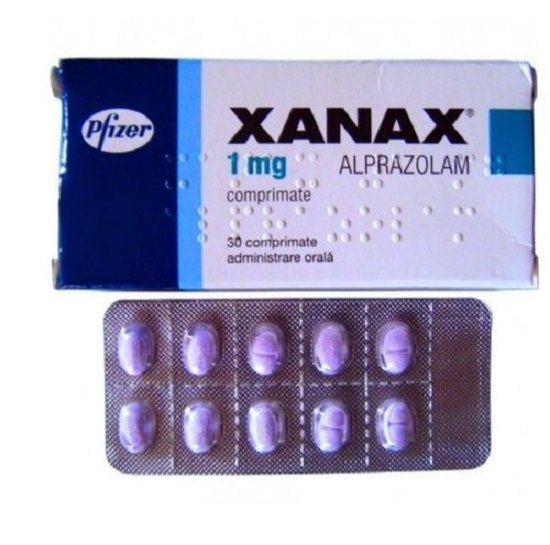
How Xanax Works – Mechanism of Action Explained for US Patients

Image: Understanding how Xanax (alprazolam) works in the brain through GABA enhancement.
🧠 Introduction: Understanding Xanax Mechanism
Xanax (alprazolam) is one of the most commonly prescribed medications in the United States for the management of anxiety and panic disorders. But how does Xanax work in the body? Understanding its mechanism of action is essential for both patients and healthcare providers to appreciate its therapeutic benefits and its potential risks.
This comprehensive guide explains the mechanism of action of alprazolam in simple, easy-to-understand terms — covering the role of GABA, how Xanax enhances GABA activity, its pharmacokinetics, onset of action, half-life, and clinical implications for US patients.
External References: FDA | Mayo Clinic | DailyMed
- The role of GABA in the brain and how Xanax enhances it
- How Xanax differs from other benzodiazepines like Valium
- Onset of action, duration, and half-life for US patients
- How Xanax is absorbed, distributed, metabolized, and excreted
- Clinical implications of how Xanax works for US patients
⚡ Understanding GABA: The Brain's Brake Pedal
To understand how Xanax works, one must first understand gamma-aminobutyric acid (GABA). GABA is the primary inhibitory neurotransmitter in the mammalian central nervous system. Think of GABA as the brain's "brake pedal" — it slows down neuronal activity, promoting relaxation, reducing anxiety, and preventing overstimulation.
When GABA binds to its receptor (the GABA-A receptor), it opens chloride channels in the neuron's membrane. This influx of negatively charged chloride ions hyperpolarizes the neuron, making it more difficult to fire. The result is a calming effect on the brain.
"Benzodiazepines like Xanax work by enhancing the inhibitory effects of GABA, the brain's primary calming neurotransmitter. This is why they are so effective for acute anxiety and panic." — MediGuideHub Medical Team
Scientific Reference: PubMed | MedlinePlus
🔬 How Xanax Enhances GABA Activity
Xanax is a positive allosteric modulator of the GABA-A receptor. This technical term simply means that Xanax binds to a different site than GABA (the "allosteric" site) and enhances the effect of GABA.
The Binding Process: Step-by-Step
- GABA binds to the GABA-A receptor — this is the natural process.
- Xanax binds to a separate, specific site on the same receptor.
- This binding changes the shape of the receptor, making it more sensitive to GABA.
- The result: When GABA binds, the chloride channel opens more frequently and for longer periods.
- Final effect: Neurons become more inhibited, reducing anxiety and promoting calm.
⏱️ Onset of Action and Duration
How Quickly Does Xanax Work?
For oral administration, the onset of anxiolytic (anti-anxiety) effects is usually seen within 30 to 60 minutes. The peak effect occurs around 1 to 2 hours post-ingestion. The 1 mg dose is often used for acute panic episodes because of this rapid onset.
How Long Does Xanax Last?
Xanax has a relatively short half-life of approximately 11 to 12 hours. This means it takes about 11-12 hours for the body to eliminate half of a single dose. Because of this short half-life, Xanax may need to be taken multiple times daily for chronic conditions like panic disorder.
| Factor | Xanax (Alprazolam) | Valium (Diazepam) |
|---|---|---|
| Onset of Action | 30-60 minutes | 30-60 minutes |
| Peak Effect | 1-2 hours | 1-2 hours |
| Half-Life | 11-12 hours | 20-100 hours |
| Active Metabolites | No | Yes |
| Duration of Action | 6-8 hours | 24+ hours |
| Time to Steady State | 2-3 days | 5-7 days |
Clinical Implications for US Patients
- Rapid onset makes Xanax ideal for acute panic episodes.
- Short half-life means less accumulation in the body.
- However, the short duration also increases the risk of interdose withdrawal.
- Multiple daily doses may be required for continuous control.
- Compared to Valium, Xanax is more suitable for acute use, while Valium is better for chronic conditions requiring smooth, sustained effect.
Read more: Xanax vs Valium: Key Differences
💊 Pharmacokinetics: How the Body Processes Xanax
Absorption
After oral administration, Xanax is rapidly and completely absorbed from the gastrointestinal tract. Peak plasma concentrations of the 1 mg dose are typically achieved within 1 to 2 hours. Food can slightly delay absorption, but it does not significantly affect the total amount absorbed.
Distribution
Xanax is highly lipophilic (fat-soluble), meaning it rapidly crosses the blood-brain barrier and is widely distributed throughout the body. It is also highly protein-bound (approximately 80%), which affects its distribution and elimination.
Metabolism
The liver metabolizes Xanax via the cytochrome P450 system (specifically CYP3A4). Unlike diazepam (Valium), alprazolam does not have active metabolites. This means its effects are shorter-lasting and less variable between patients.
Learn more from the FDA →
Excretion
The metabolites are eventually conjugated with glucuronic acid and excreted via the kidneys. Because of its short half-life, Xanax can be detected in urine for up to 4 days after the last dose.
Reference: DailyMed - Official FDA Label
🎯 Why Xanax is Effective for Anxiety and Panic
The unique pharmacokinetic profile of Xanax makes it particularly effective for certain conditions:
- Panic Disorder: The rapid onset allows patients to take Xanax at the first sign of a panic attack and experience relief within 30-60 minutes.
- Acute Anxiety: For sudden episodes of severe anxiety, Xanax provides quick, reliable relief.
- Social Anxiety: Some US patients use Xanax for situational anxiety, though this is generally discouraged due to dependence risk.
However, the short half-life also means that Xanax is generally recommended for short-term use (2-4 weeks) to minimize the risk of dependence and withdrawal.
⚠️ Risks and Considerations for US Patients
Dependence and Withdrawal
Because Xanax acts quickly and provides rapid relief, it has a high potential for abuse and dependence. The short half-life also means that patients may experience withdrawal symptoms between doses, leading to a pattern of escalating use.
- Xanax is a Schedule IV controlled substance in the United States.
- It can cause physical dependence with long-term use.
- Do not stop taking Xanax abruptly — withdrawal can be life-threatening.
- Always take Xanax exactly as prescribed by your healthcare provider.
📌 Conclusion: Understanding How Xanax Works
Xanax (alprazolam) works by enhancing the effects of GABA, the brain's primary inhibitory neurotransmitter. As a positive allosteric modulator of the GABA-A receptor, Xanax amplifies the natural calming effect of GABA, providing rapid relief for anxiety and panic disorders.
The rapid onset (30-60 minutes) makes it ideal for acute panic episodes, while its short half-life (11-12 hours) allows for flexible dosing but also increases the risk of dependence and withdrawal.
Key Takeaways for US Patients:
- Xanax enhances GABA, the brain's primary inhibitory neurotransmitter.
- It works by binding to the GABA-A receptor and increasing chloride channel opening.
- Onset of action is 30-60 minutes, with peak effects at 1-2 hours.
- Half-life is 11-12 hours, requiring multiple daily doses for chronic conditions.
- The short half-life increases the risk of dependence and withdrawal.
- Always take Xanax exactly as prescribed and never stop abruptly.
- For a complete overview, read our Xanax medication guide.
📚 References & Sources
📚 Read the complete medication guide: Xanax (Alprazolam) Master Guide — Uses, Dosage, Side Effects & Safety
Related Guides: Xanax Side Effects • Withdrawal & Tapering • Drug Interactions • Dosage Guide